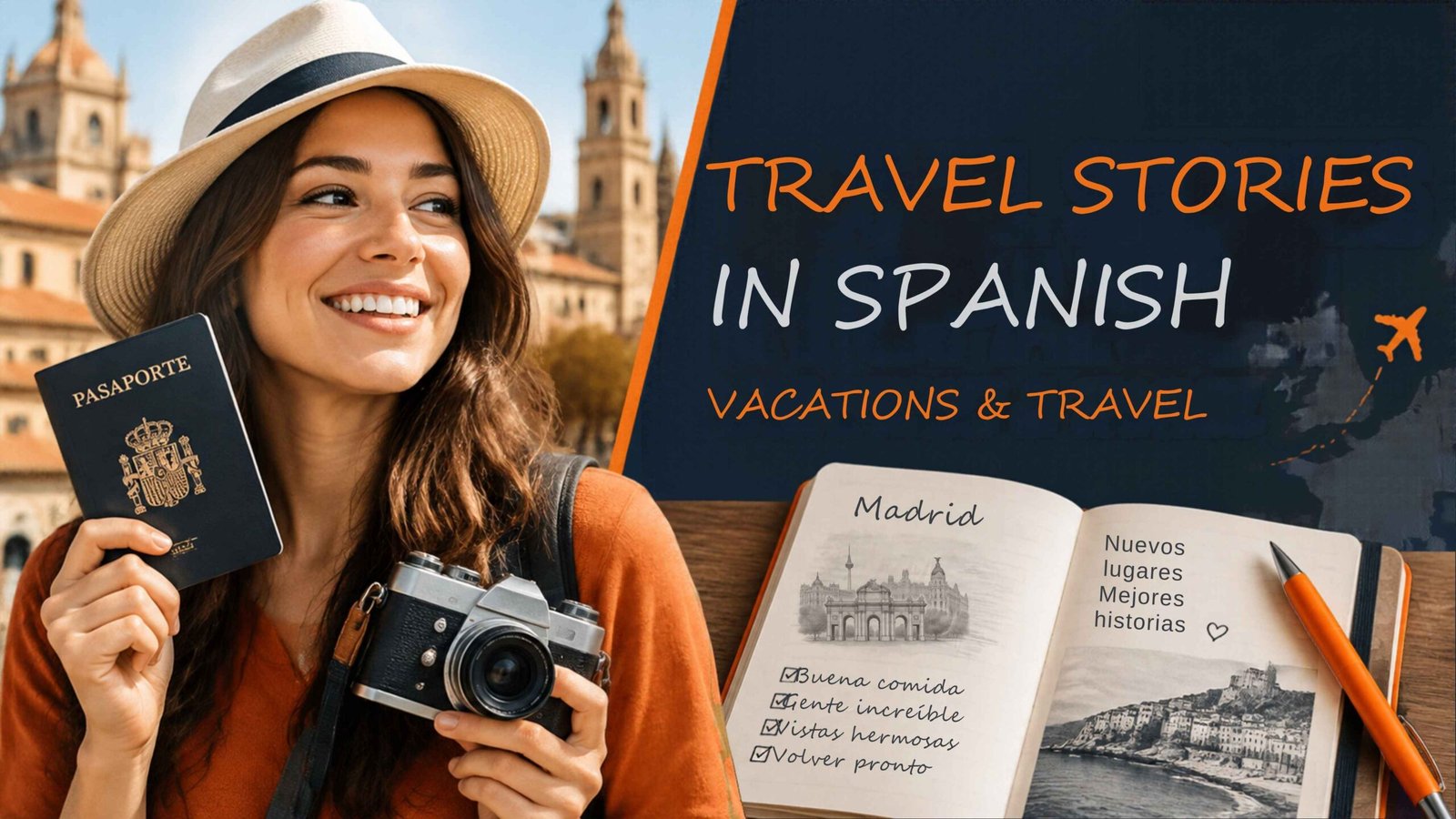
One of the most rewarding and exciting parts of mastering a new language is sharing your personal experiences and adventures with others. When you travel or meet Spanish speakers, being able to recount your past experiences brings conversations to life. To do this successfully, you need to know how to express completed actions in the past. If you want to review the fundamental verb forms first, take a look at our complete guide on Completed Actions: Pretérito Indefinido Regular & Irregular. In this comprehensive post, you will learn how to talk about your last vacation in Spanish, describe where you went, what you saw, and how you felt.
Introduction & Usage: Why Talk About Past Trips?
When someone asks you “¿Cómo estuvieron tus vacaciones?” (How was your vacation?), knowing how to answer correctly opens the door to natural, engaging cultural exchanges. To narrate a trip successfully, you must use the Pretérito Indefinido (simple past tense) to express actions that happened at a specific point in time and are completely finished.
Let’s look at the three core pillars required to build a fluent, natural-sounding vacation narrative:
- Setting the Time Frame: Clearly defining when your trip took place using time markers like el verano pasado (last summer) or el año pasado (last year).
- Stating the Destination & Logistics: Using travel verbs such as viajar (to travel) or ir (to go) alongside precise prepositions.
- Detailing Everyday Activities: Describing sightseeing, gastronomy, and leisure using accurate regular and irregular past tense conjugation forms.
Explained Examples: Vacation Sentences in Action
Grammar comes alive when seen in real conversational contexts. Use the table below to review how everyday travel phrases are structured and why specific verb forms are chosen:
| English Phrase | Spanish Translation | Grammatical Breakdown & Usage Context |
|---|---|---|
| My vacation was incredible | Mis vacaciones fueron increíbles | Plural subject (mis vacaciones) + irregular past form of ser (fueron) + agreeing adjective |
| I traveled to Spain last summer | Viajé a España el verano pasado | Regular -AR verb in first-person singular (viajé) + destination preposition + specific time marker |
| I stayed in a cozy hotel | Me alojé en un hotel acogedor | Reflexive past verb (me alojé) describing accommodation choice + descriptive adjective |
| I visited historical monuments | Visité monumentos históricos | Regular past verb (visité) + direct object noun + plural modifying adjective |
| I tried delicious local food | Probé comida local deliciosa | 1st-person spelling adjustment (-gar > -gué in probé/probaste) + culinary vocabulary |
Real-World Video Guide
Watching native speakers recount their travel memories is one of the fastest ways to internalize rhythm and intonation. Watch the video below to hear authentic examples of vacation storytelling:

Video Comprehension: True or False?
Based on the conversation between María and Pedro in the video, decide if the following 5 statements are True or False:
1. María traveled to Madrid with her family.
2. Pedro stayed in a big noisy hostel in the center.
3. María visited historical monuments and took lots of photos during the day.
4. María ate delicious tapas at a traditional restaurant.
5. Pedro bought souvenirs for his friends on the last day.
Step-by-Step Instructions for Your Vacation Story
Constructing your personal travel story doesn’t have to be overwhelming. Follow these three simple instructions to organize your thoughts and speak with clarity:
- Start with the When and Where: Begin by establishing the season or year and your geographical destination (e.g., El año pasado viajé a México).
- Use Chronological Connectors: Guide your listener smoothly through your itinerary using sequencing words like Primero (First), Luego (Then), and Finalmente (Finally).
- Close with Your Overall Impression: Finish your narration by expressing your feelings or evaluating the experience (e.g., Fue una experiencia inolvidable).
Practice Exercise: Interactive Travel Story Check
Test your understanding of vacation storytelling phrases and past tense applications! Complete the interactive challenge below:
The Importance of What You Learned and Your Next Steps
Mastering how to talk about your past travels represents a monumental milestone in your language acquisition journey. It shifts your communication from basic, present-moment survival phrases into rich, personal storytelling that connects you deeply with other cultures. Remember that fluency is built one conversation at a time. Keep practicing your past tense verbs daily, embrace making mistakes as part of the learning process, and continue exploring new ways to express your unique life experiences in Spanish!