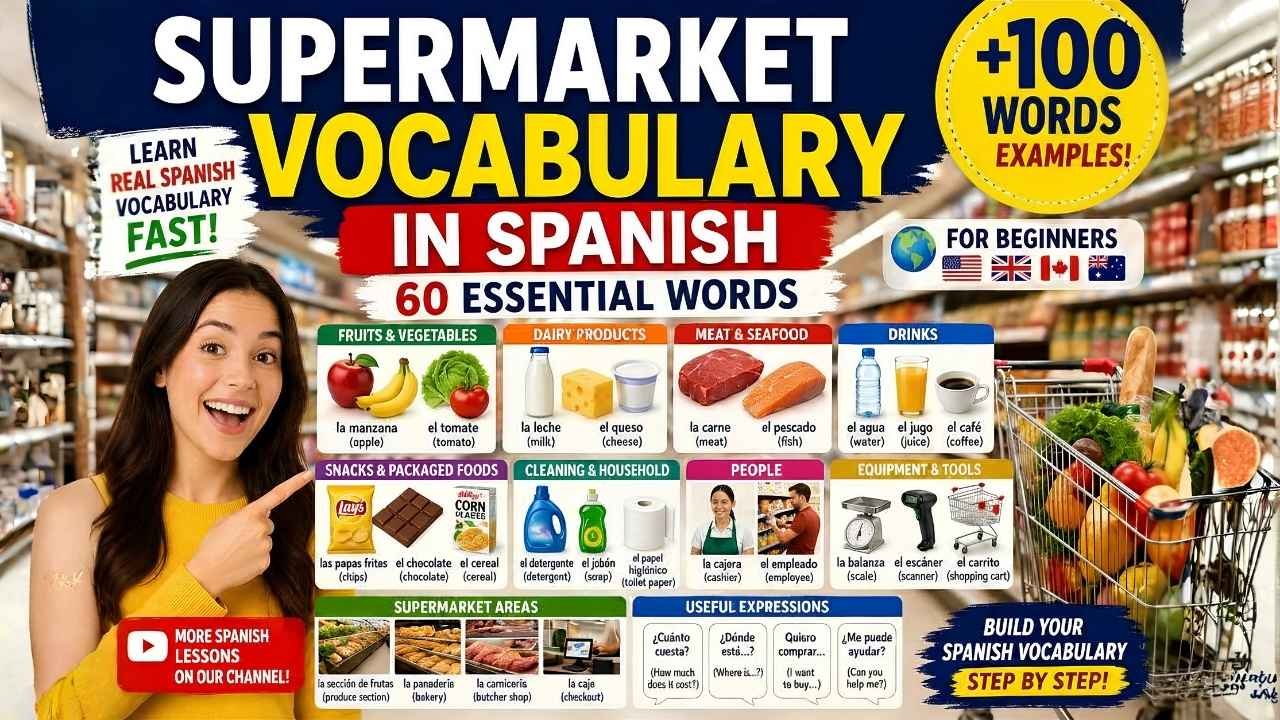
Going to the supermarket is part of everyday life, which makes it one of the best places to learn practical Spanish. Whether you are traveling to a Spanish-speaking country, talking with native speakers, or simply improving your Spanish step by step, supermarket vocabulary can help you understand real conversations and daily situations more naturally.
In this @spanishnowedu lesson, you will learn useful Spanish words related to fruits, vegetables, drinks, snacks, cleaning supplies, supermarket equipment, and much more. You will also see simple examples that make the vocabulary easier to remember and use in context.
This lesson is designed for beginner and intermediate Spanish learners, especially English speakers who want practical vocabulary they can actually use.
Watch the Full Spanish Supermarket Vocabulary Video
Watch our complete beginner-friendly Spanish supermarket vocabulary lesson with pronunciation, visual examples, and useful everyday words you can start using immediately.

Why Learning Supermarket Vocabulary in Spanish Is So Useful
Learning supermarket vocabulary in Spanish is one of the most practical ways to improve your everyday communication skills. Grocery stores are part of daily life, which means these words appear constantly in conversations, advertisements, recipes, shopping lists, and travel situations.
If you visit a Spanish-speaking country, knowing supermarket vocabulary can help you feel more confident and independent. You will be able to ask for products, understand food labels, compare prices, and communicate more naturally with employees and cashiers.
For example, you may need to ask:
¿Dónde está la leche? (Where is the milk?)
¿Cuánto cuesta este queso? (How much does this cheese cost?)
¿Aceptan tarjetas? (Do you accept cards?)
These are real-life situations that Spanish learners commonly experience while traveling, studying abroad, or living in a Spanish-speaking environment.
Another reason supermarket vocabulary is so useful is because it helps you learn Spanish through categories. Instead of memorizing random words, you learn related vocabulary together, which makes it easier to remember and use naturally.
This type of grouped learning improves memory retention and helps beginners build vocabulary faster. The more practical and visual your learning becomes, the easier it is to remember new words and use them confidently in real conversations.
Fruits and Vegetables in Spanish: Everyday Grocery Vocabulary
Learning fruits and vegetables in Spanish is one of the easiest and most practical ways to build everyday vocabulary. These are common words you will hear in supermarkets, restaurants, recipes, and daily conversations.
Use this visual infographic to connect the Spanish words with real images and improve your memory through visual learning.
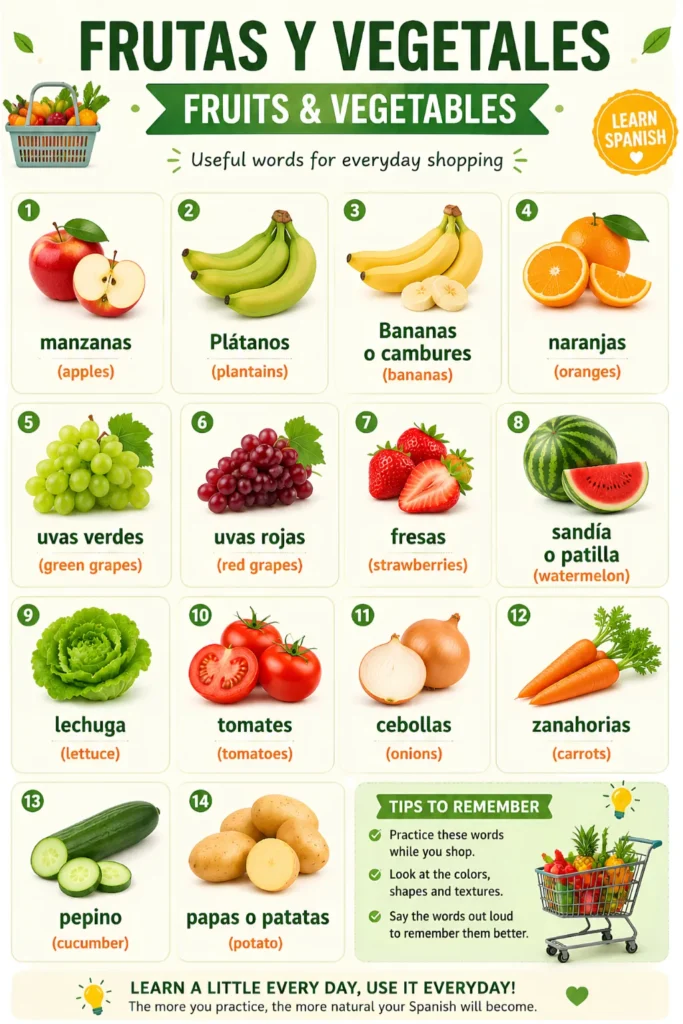
Fresh produce is one of the first sections you see in a supermarket. Learning these words is very useful because they appear in recipes, conversations, menus, and shopping lists.
| Spanish | English |
|---|---|
| manzanas | apples |
| plátano | plantain |
| naranjas | oranges |
| uvas | grapes |
| fresas | strawberries |
| lechuga | lettuce |
| tomates | tomatoes |
| cebollas | onions |
| zanahorias | carrots |
| la papa | potato |
Simple Example Sentences with Fruits and Vegetables
- Necesito comprar tomates y cebollas: I need to buy tomatoes and onions.
- Esta manzana está muy fresca: This apple is very fresh.
- ¿Dónde están las zanahorias?: Where are the carrots?
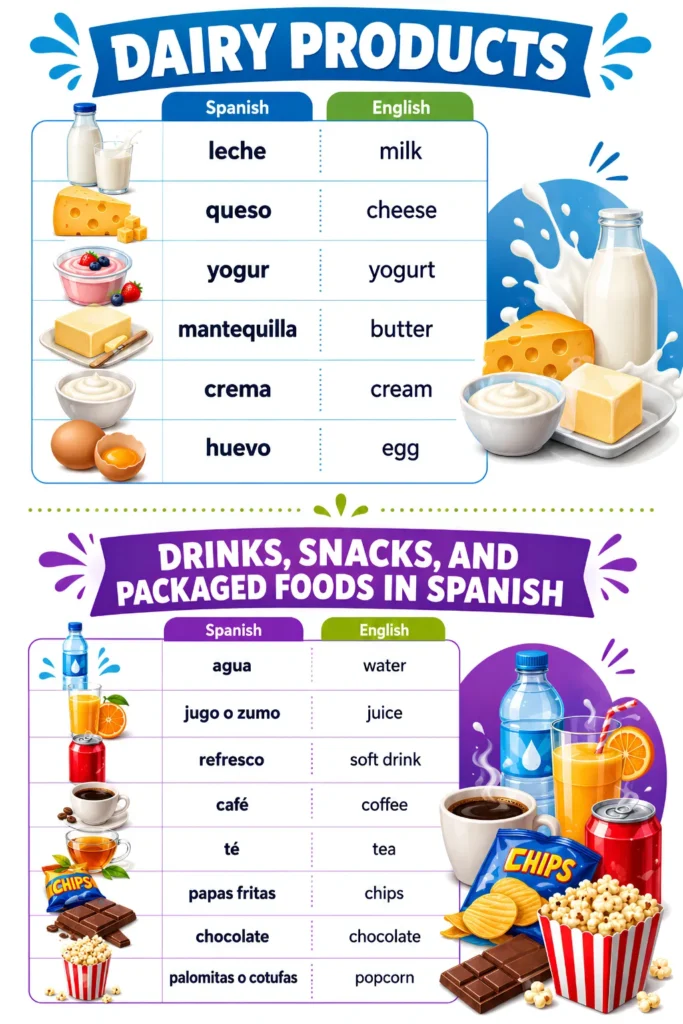
Dairy Products Vocabulary in Spanish for Beginners
Dairy products are another important supermarket category. These words are common in everyday Spanish conversations.
| Spanish | English |
|---|---|
| leche | milk |
| queso | cheese |
| yogur | yogurt |
| mantequilla | butter |
| crema | cream |
| huevo | egg |
Useful Spanish Phrases for Shopping and Ordering
- Quiero comprar leche: I want to buy milk.
- El queso está en el refrigerador: The cheese is in the refrigerator.
- ¿Necesitamos huevos? Do we need eggs?
Drinks, Snacks, and Packaged Foods in Spanish
Snacks and drinks are easy vocabulary categories for beginners because many products are visual and repetitive.
| Spanish | English |
|---|---|
| agua | water |
| jugo o zumo | juice |
| refresco | soft drink |
| café | coffee |
| té | tea |
| papas fritas | chips |
| chocolate | chocolate |
| palomitas o cotufas | popcorn |
Easy Example Sentences with Supermarket Vocabulary
- Me gusta el café por la mañana: I like coffee in the morning.
- Los niños quieren chocolate: The children want chocolate.
- Compramos papas fritas para la fiesta: We bought chips for the party.
Meat, Seafood, and Drinks in Spanish
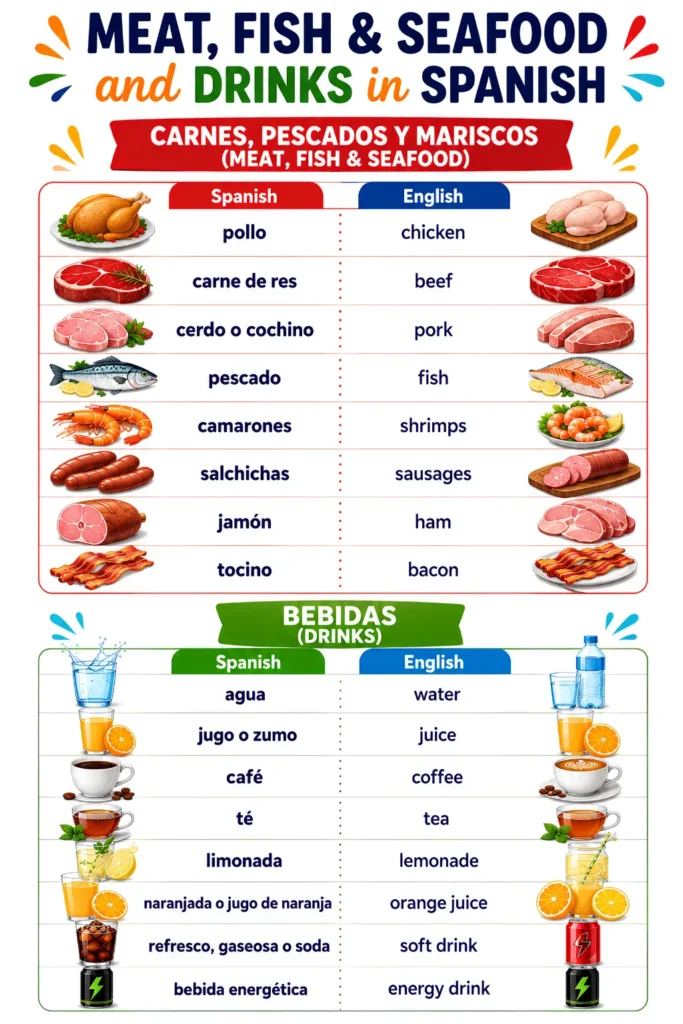
Learning food and drink vocabulary is essential for everyday Spanish conversations. In this section, you’ll discover common meat, seafood, and beverage words in Spanish and English. These vocabulary lists are perfect for beginners, travelers, students, and anyone wanting to improve practical Spanish communication skills.
Meat, Fish & Seafood in Spanish
Learn the most common meat, fish, and seafood vocabulary words in Spanish with English translations. These words are useful for restaurants, grocery shopping, cooking, and daily conversations.
Meat, Fish & Seafood Vocabulary Table
| Spanish | English |
|---|---|
| pollo | chicken |
| carne de res | beef |
| cerdo o cochino | pork |
| pescado | fish |
| camarones | shrimps |
| salchichas | sausage |
| jamón | ham |
| tocino | bacon |
Drinks Vocabulary Table
Drinks in Spanish
Expand your Spanish beverage vocabulary with these common drink names used in restaurants, cafés, supermarkets, and everyday situations.
| Spanish | English |
|---|---|
| agua | water |
| jugo | juice |
| café | coffee |
| té | tea |
| limonada | lemonade |
| naranjada o jugo de naranja | orange juice |
| refresco, gaseosa o soda | soft drink |
| bebida energética | energy drink |
Visual learning can help you memorize Spanish vocabulary faster. Use this colorful infographic to review common meat, seafood, and drink names in Spanish and English.
Snacks & Packaged Foods in Spanish
This vocabulary list includes common snacks, nuts, cereals, pasta, rice, and packaged foods with English translations to help beginners build practical Spanish skills quickly.
Snacks & Packaged Foods in Spanish
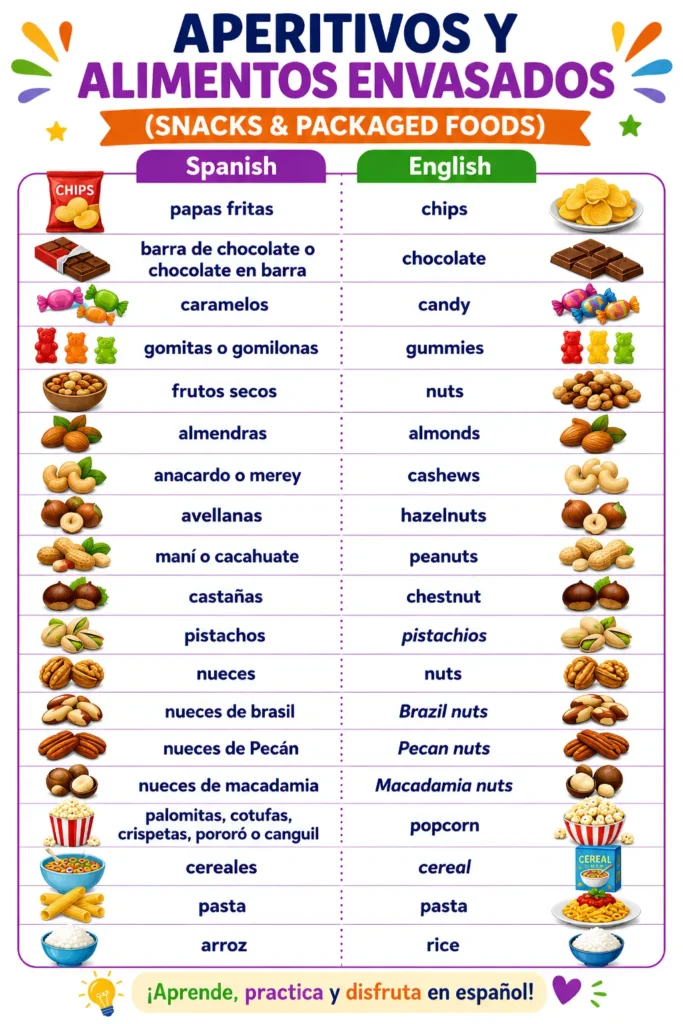
Discover common Spanish vocabulary for snacks, nuts, cereals, and packaged foods. These words are frequently used in supermarkets, restaurants, and daily conversations.
| Spanish | English |
|---|---|
| papas fritas | chips |
| barra de chocolate o chocolate en barra | chocolate |
| caramelos | candy |
| gomitas o gomilonas | gummies |
| frutos secos | nuts |
| almendras | almonds |
| anacardo o merey | cashews |
| avellanas | hazelnuts |
| maní o cacahuate | peanuts |
| castañas | chestnuts |
| pistachos | pistachios |
| nueces | nuts |
| nueces de brasil | Brazil nuts |
| nueces de Pecán | Pecan nuts |
| nueces de macadamia | Macadamia nuts |
| palomitas, cotufas, crispetas, pororó o canguil | popcorn |
| cereales | cereal |
| pasta | pasta |
| arroz | rice |
Reviewing food vocabulary regularly helps improve memory and pronunciation. Try using these Spanish snack and packaged food words while shopping, cooking, or reading product labels to reinforce your learning naturally.
Cleaning Supplies and Household Products in Spanish
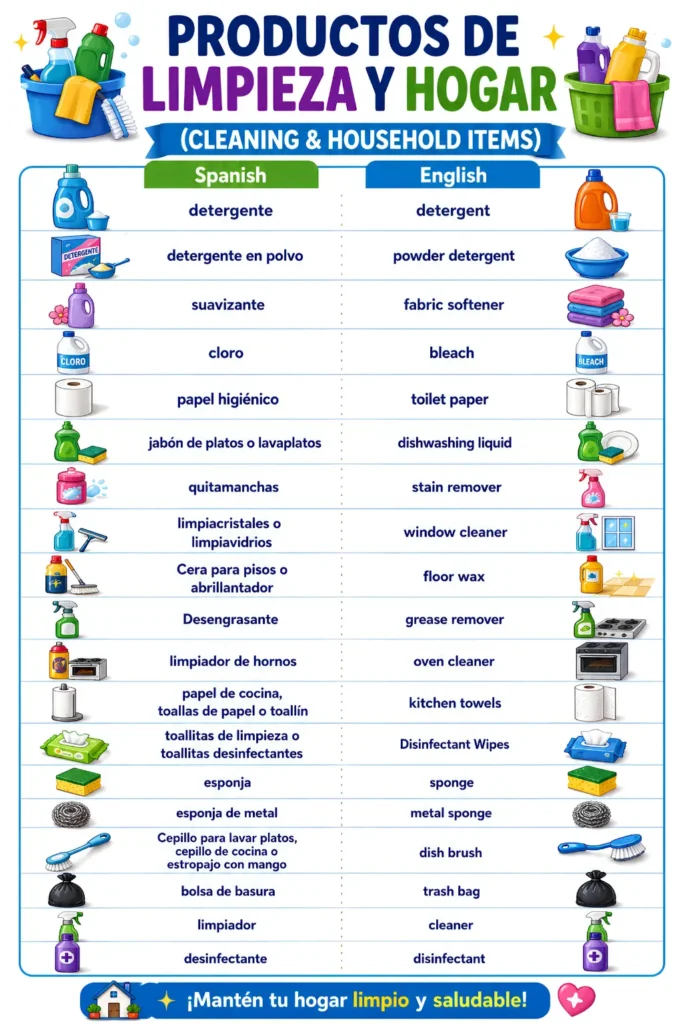
This category is extremely useful because these products appear in homes, stores, and advertisements.
| Spanish | English |
|---|---|
| detergente | detergent |
| jabón | soap |
| papel higiénico | toilet paper |
| esponja | sponge |
| bolsa de basura | trash bag |
| desinfectante | disinfectant |
Useful Examples You Can Use in Real-Life Situations
- Necesitamos más jabón.: We need more soap.
- El detergente está en oferta: The detergent is on sale.
- Compra papel higiénico, por favor: Buy toilet paper, please.
Personal Care Products in Spanish
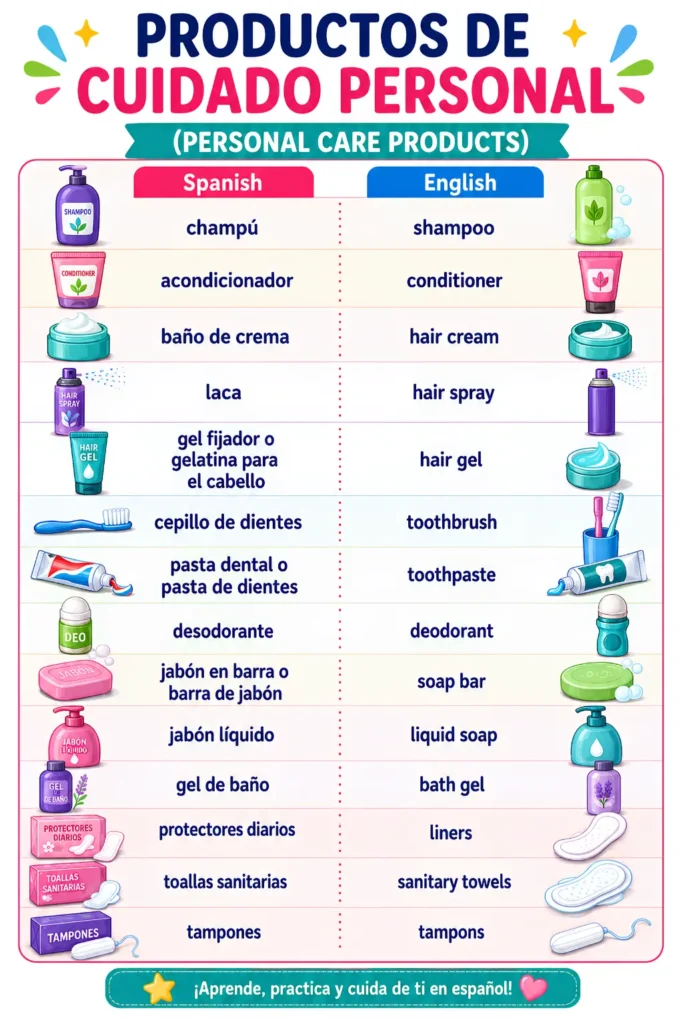
Personal care vocabulary is useful for shopping, traveling, reading product labels, and everyday conversations. In this section, you’ll learn common hygiene and beauty product names in Spanish and English to help improve your practical vocabulary quickly and naturally.
Personal Care Products in Spanish
Learn common Spanish vocabulary for personal hygiene and beauty products with English translations. These words are useful for shopping, travel, and daily conversations.
| Spanish | English |
|---|---|
| champú | shampoo |
| acondicionador | conditioner |
| baño de crema | hair cream |
| laca | hair spray |
| gel fijador o gelatina para el cabello | hair gel |
| cepillo de dientes | toothbrush |
| pasta dental o pasta de dientes | toothpaste |
| desodorante | deodorant |
| jabón en barra o barra de jabón | soap bar |
| jabón líquido | liquid soap |
| gel de baño | bath gel |
| protectores diarios | liners |
| toallas sanitarias | sanitary towels |
| tampones | tampons |
Supermarket Equipment, Machines, and Store Areas in Spanish
These words help learners understand how supermarkets work in Spanish-speaking countries.
| Spanish | English |
|---|---|
| la balanza | scale |
| el escáner | scanner |
| la caja registradora | cash register |
| la cinta transportadora | conveyor belt |
| el lector de códigos de barras | barcode reader |
| el carrito de compras | shopping cart |
| el pasillo | aisle |
| la caja | checkout counter |
Example Sentences Using Supermarket Vocabulary
- La caja está al final del supermercado: The checkout counter is at the end of the supermarket.
- El cliente usa un carrito de compras: The customer uses a shopping cart.
- La fruta se pesa en la balanza: Fruit is weighed on the scale.
People You See in a Supermarket in Spanish
Learning words for people and jobs helps improve listening comprehension and conversation skills.
| Spanish | English |
|---|---|
| el cliente | customer |
| la cajera | cashier (female) |
| el empleado | employee (male) |
| el gerente | manager (male) |
| el panadero | baker (male) |
| el carnicero | butcher (male) |
Example Sentences
- La cajera es muy amable: The cashier is very friendly.
- El cliente compra muchas frutas: The customer buys many fruits.
- El carnicero trabaja en la sección de carne: The butcher works in the meat section.
How to Remember Spanish Vocabulary Faster and More Naturally
One of the best ways to remember vocabulary is through repetition and context. Instead of memorizing isolated words, try to imagine real situations inside a supermarket.
You can also:
- create shopping lists in Spanish
- label products at home
- repeat vocabulary out loud
- watch supermarket videos in Spanish
- practice categories together
Visual learning is especially powerful for vocabulary lessons like this one because your brain connects images with words more easily.
Another useful strategy is to review vocabulary in short sessions every day instead of studying everything at once.
Practice Exercises to Review Spanish Supermarket Vocabulary
Test your understanding with these beginner-friendly Spanish vocabulary exercises and review the words from this lesson in context.
Choose the Correct Answer
Spanish Supermarket Vocabulary Crossword Challenge
Write the correct Spanish word for each clue.
Final Thoughts on Learning Supermarket Vocabulary in Spanish
Learning supermarket vocabulary in Spanish is a great way to improve your everyday communication skills. These words are practical, visual, and easy to practice in real-life situations.
The more you expose yourself to vocabulary through videos, reading, listening, and repetition, the more natural Spanish will start to feel.
Remember that language learning is a process. Small daily practice sessions can create huge progress over time.
Continue practicing these supermarket words and try using them the next time you make a shopping list or visit a grocery store.
Continue Learning Spanish Vocabulary with More Beginner Lessons
Explore more Spanish vocabulary lessons, listening practice, and beginner-friendly learning resources to continue building your Spanish step by step.
Want to keep learning useful Spanish vocabulary?
Check out our related lessons:
Thanks for learning with us today, and see you in the next Spanish vocabulary lesson.